The man always comes correct. From Mother Jones...
"Can rap sell activism as well as it has $150 sneakers, bottle service, and grill work? Can the very people who've made vast fortunes off selling stupid help reform the industry?"

Sunday, November 11, 2007

Jeff Chang on M.I.A.

from The Nation...
"If rootlessness is the defining condition of the planet of slums, then what does it mean for art to come home? Kala's answers--like all great "political" art--cannot be any more than provisional. But now, at least, no longer running to or from someone else's utopia, M.I.A. is behind the wheel, switching the lost youth of the Fourth World into the network society, her radio on."
Sunday, September 02, 2007
In Defence of Fashion

I'm starting to feel a bit shallow and ill-read and it's showing--do I only read the New York Times?? Perhaps. In any case, I found this article by the inimitable Guy Trebay quite invaluable.
Some of the main points:
Intellectuals, feminists, "thinking people" love to deride fashion.
The academic uniform "is intended to make you look like you’re not paying attention to fashion, and not vain, and not interested in it." (Anti-fashion fashion.)
"Clothes are ideas...costume serves to billboard the self." (Identity would be impossible to convey without fashion.)
"[T]he appetite for change so essential to fashion is a more culturally dynamic force than is generally imagined."
Fashion is essential to the New York City economy--reason enough not to deride it so cavalierly.
Here's the article in full:
New York Times, September 2, 2007
Admit It. You Love It. It Matters.
By GUY TREBAY
DEPENDING on who is doing the talking, fashion is bourgeois, girly, unfeminist, conformist, elitist, frivolous, anti-intellectual and a cultural stepchild barely worth the attention paid to even the most minor arts.
With Fashion Week beginning in New York on Tuesday — the start of a twice-yearly, monthlong cycle of designer presentations on two continents and in four cities that will showcase hundreds of individual designers — it is worth asking why fashion remains the most culturally potent force that everyone loves to deride.
“Everyone” is not here intended to imply the deeply initiated, those pixie-dust people for whom the shape of a dress or the cut of a sleeve is a major event. There is certainly a place for those types, whether they are cuckoos like the late fashion editor Diana Vreeland (who once wrote, “I’m told it’s not in good taste to wear blackamoors anymore, but I think I’ll revive them”), or extravagant mythomaniacs like John Galliano, the Dior designer — who plays a pirate one season, a gypsy the next — or even the young celebrity brand pimps who would probably be offering paparazzi a lot more gratuitous crotch shots if designers didn’t provide them with free clothes.
No, everyone means the rest of us, those who scorn fashion outright and those who don’t but who nevertheless have the uneasy sense that this compelling world of surfaces and self-presentation is unworthy of regard.
“There is this suggestion that fashion is not an art form or a cultural form, but a form of vanity and consumerism,” said Elaine Showalter, the feminist literary critic and a professor emeritus at Princeton. And those, Ms. Showalter added, are dimensions of culture that “intelligent and serious” people are expected to scorn.
Particularly in academia, where bodies are just carts for hauling around brains, the thrill and social play and complex masquerade of fashion is “very much denigrated,” Ms. Showalter said. “The academic uniform has some variations,” she said, “but basically is intended to make you look like you’re not paying attention to fashion, and not vain, and not interested in it, God forbid.”
When Valerie Steele, the director of the museum at the Fashion Institute of Technology in New York, declared an interest at Yale graduate school in pursuing the history of fashion, colleagues were horror-struck. “I was amazed at how much hostility was directed at me,” Ms. Steele said. “The intellectuals thought it was unspeakable, despicable, everything but vain and sinful,” she added. She might as well have joined a satanic cult.
And that, substantially, is how a person still is looked at who happens to mention in serious company an interest in reading, say, Vogue.
“I hate it,” Miuccia Prada once remarked to me about fashion, in a conversation during which we mutually confessed to unease at being compelled by a subject so patently superficial.
“Of course, I love it also,” Ms. Prada added, and her reason said a lot about why fashion is a subject no one should be ashamed to take seriously. “Even when people don’t have anything,” Ms. Prada said, “they have their bodies and their clothes.”
They have their identities, that is, assembled during the profound daily ritual of clothing oneself; they have, as Colette once remarked, their civilizing masks. And yet, despite its potential as a tool for analyzing culture, history, politics and creative expression; as a form of descriptive shorthand used through all of written history (including the Vedas, the Bible and the Koran); as a social delight, fashion is just as often used as a weapon, a club wielded by those who forget that we are saying something about ourselves every time we get dressed — not infrequently things that fail to convey the whole truth.
Why else was Hillary Rodham Clinton’s campaign moved to attack the fashion critic of The Washington Post for attempting to read the candidate’s clothes? The editorial blitz that followed Senator Clinton’s outraged response to some blameless observations about a slight show of cleavage on the Senate floor was instructive, as was Mrs. Clinton’s summoning up of feminist cant about the sexism of focusing on what a woman wears to the exclusion of her ideas.
But clothes are ideas; to use a fashionism — Hello! Scholars like the art historian Anne Hollander have spent decades laying out the way that costume serves to billboard the self. One would have thought that few people understand this truth as well as the woman occasionally known as Hairband Hillary, who, after all, assiduously recast her image from that of demure and wifely second-banana to power-suited policy wonk, dressed to go forth and lead the free world.
Politicians are far from the only people who act as though the concerns of fashion are beneath consideration. When the Italian film legend Michelangelo Antonioni died recently, film critics and obituary writers went into raptures about his classic “L’Avventura,” a movie few people outside of cinema studies classes are likely, at this point, to have seen. Some remarked that the Antonioni of that early film had already begun losing his edge by the time he detoured into films like “Blowup,” whose plot revolves around the fashion world.
Never mind that “L’Avventura” is a sharply stylish movie and that in Antonioni’s hands wardrobe does the work dialogue would for more talk-prone directors. Absent plot, clothes are used by Antonioni to frame the mood of upper-class anomie and to make graphically his distaste for the Italian neorealists, who all seemed to have costumed their movies using the same set of Anna Magnani’s hand-me-downs.
Like most Italians then and now, Antonioni had a sympathy for the role clothes play in human theater. And while “Blowup” is set in a fashion (or “mod”) milieu, it is less about fashion, really, than about an accidentally photographed murder and the instability of what is seen and known. Even 40 years on, the film’s surfaces remain so stylishly assured and so cool they automatically arouse intellectual suspicion. Trusting in appearances, Antonioni always seemed to suggest, may be a losing proposition.
But investing in them, as Ms. Steele said, can be far worse.
“In our deeply Puritan culture, to care about appearance is like trying to be better than you really are, morally wrong,” she said.
It is to be driven by the dictates of desires and not needs. And yet the appetite for change so essential to fashion is a more culturally dynamic force than is generally imagined. Luxury, and not necessity, may be the true mother of invention, as the writer Henry Petroski observed. This proposition is an easier sell when the luxury in question is an iPhone, and not a Balenciaga handbag, but the same principles hold.
In places like Silicon Valley the quest for newer and better stuff results in technology patents, a clear measure of economic robustness. Fashion innovations may be harder to patent or track, but it seems obvious that huge sectors of the New York City economy would churn to a halt if all the Project Runway types suddenly stopped migrating here in the belief that the world could be changed by the sort of innovation inherent in how a garment is cut.
“Fashion is so easy to hate,” said Elizabeth Currid, a professor at the University of Southern California’s School of Policy, Planning and Development and the author of “The Warhol Economy: How Fashion, Art and Music Drive New York City” (Princeton University Press).
“Cultural industries like fashion are sometimes seen as something only the skinny girls in high school think about,” said Ms. Currid — and less often as a fascinating field for cultural study and also the bill-payers keeping thousands of seamstresses, cutters, pattern makers, truckers, real estate brokers and publicity hacks employed.
Analyzing Bureau of Labor statistics, Ms. Currid arrived at the not-altogether-startling conclusion that the densest concentration of fashion designers in the United States is in New York. A glance at the roster of foreign designers showing at New York Fashion Week, Sept. 4 through 12 — Russia, Turkey, India and Brazil are represented — suggests a good reason for that.
“Even if, on some level, fashion is fantasy, the concentration of events that go into producing it and the resulting social spillover,” as Ms. Currid said, can result in a huge cumulative economic advantage for a city. While the seasonal shows in the tents in Bryant Park, with their enforced passivity and aura of feminine spectatorship, lend themselves to derision, enforcing the sense that all those fops and dandies and flibbertigibbets, all the socialite geishas and second-rate celebrities and editorial priestesses are little more than idlers and dupes, big business goes on. Odds are that the same journals whose critics score easy points off fashion are economically propped up by the life-support provided by advertising for dresses and bags and shoes.
One of the most startling findings of her research, Ms. Currid said, was how powerful something as superficial, girly, bourgeois, unfeminist, conformist, elitist and frivolous as fashion can be in creating the intangible allure that attracts money, talent, beauty and enterprise to cities.
“How does one place make itself different from another in a world where there’s a Starbucks on every corner?” she asked. “People have to believe that this is the place to be.” Fashion has that effect.
Saturday, August 25, 2007
‘Originals’ today are yesterday’s same old songs
This article, reprinted in the Arkansas Democrat-Gazette on August 23, is a quite original take on the question of "originality" in today's pop songs. Is cyberspace threatening to destroy musical creativity, due to rampant sampling, recycling, versioning and cut'n'mixing?
‘Originals’ today are yesterday’s same old songs
BY ANN POWERS, LOS ANGELES TIMES
Elton John’s outburst about the Internet’s effect on pop — he suggested that a five-year cyberspace shutdown might be the only way to renew the music’s creativity — was greeted with eye rolling and the general consensus that he should splurge on an iPod. But his consternation is understandable.
The music industry is in tatters; the noise that amateurs once kept to themselves emanates from every corner of cyberspace, and between the money-obsessed mainstream and the hype-addled underground, there’s no agreement on what will endure. For a traditionalist like John, it’s a scary time — old standards are dying fast.
Consider one of the enduring myths of pop: that originality is paramount. This idea always has been pretty much a lie, given the history of music-making as a borrower’s art.
In an essay on the merits of playing copycat published in the February Harper’s, Jonathan Lethem traced the origins of American pop to the “open source” culture of blues and jazz and noted that recording techniques, which allowed for literal duplication of sounds, have steadily enhanced the artful cribbing pop’s innovators employ.
“As examples accumulate,” Lethem writes, “it becomes apparent that appropriation, mimicry, quotation, allusion, and sublimated collaboration consist of a kind of sine qua non of the creative act, cutting across all forms and genres in the realm of cultural production.” (Lethem later reveals that he “stole, warped and cobbled together” his essay, including this idea, which came from the book Owning Culture by Kembrew McLeod. )
Lethem’s point might seem obvious to any sample-chasing hip-hop fan or Dylanologist who has traced the master’s loving thefts over the decades. Yet the idea that a song or a sound can be unique remains potent, especially for musicians.
The financial structure of the music industry, which rewards creativity when it’s copyrighted, has upheld the idea that one person can “own” a song.
ACCUSED Avril Lavigne has been accused of a host of rip-offs, including the chorus of her hit “Girlfriend,” which so closely resembles a 1979 song by the power-pop band the Rubinoos that it has spurred a lawsuit. [You decide!] Lavigne’s former collaborator, Chantal Kreviazuk, subsequently accused her of pilfering ideas (Kreviazuk recanted her accusation after Lavigne threatened to sue her ). And then it surfaced that another new Lavigne song might not be so fresh: The beats and vocal cadence of “I Don’t Have to Try” mirror those Peaches employed in 2003’s “I’m the Kinda.” [Note: check this video and decide for yourself.] One would think a striver such as Lavigne would crumble under this scrutiny, but the very fans who have been tracing her transgressions are beginning to make a case for forgiving her. On YouTube, some videos make the argument that Lavigne is just part of a chain: A new single from High School Musical star Vanessa Hudgens sounds uncannily like an older Lavigne hit, and the Rubinoos borrowed their barking chorus from The Rolling Stones in the first place.
The written word is never as convincing as hearing the musical connections themselves, and the huge archive of recordings available online allows for instant comparison. Where once an old blues tune that Bob Dylan borrowed from would be known by only the obsessive few, now anyone can argue about it in voluminous posts on the Expecting Rain (expectingrain. com ) message board.
Hip-hop already had made the patchwork nature of pop obvious years before through the collage technique of sampling. Cyberspace has made everyone a participant in the disc jockey culture of “digging in the crates.” Artists still might want to make music no one has heard before, but they’re forced to admit that even their most creative moments are just part of a long chain.
Even artists who do burst forth with a startling take on pop eventually will find themselves accused of being derivative. Maybe that’s why M.I.A., the British-Sri Lankan polymath who’s as fresh as artists come these days, shouted “This is my song!” as she began “Jimmy,” from her new album, Kala, during a July show in Los Angeles. “Jimmy” is not technically M.I.A.’s song; it’s a cover of a song from a 1983 Bollywood movie Disco Dancer. [check it out on youtube.) M.I.A. can’t pretend she never knew that source — she grew up loving Bollywood music. But her statement of ownership also held an opposite meaning: Past versions be damned; the vigorous new beats and vocals she applies make her “Jimmy’s” rightful owner now.
DISTINCTION MATTERS With the very idea of originality in flux, another trait defines today’s most interesting stars. Distinctiveness is what matters, the ability not to separate from the crowd but to stand out within it. The occasional lawsuit aside, pop stars are now much more willing to wear their influences proudly and make clear how they’re building their music from them.
Pop that aims for distinctiveness acknowledges its influences, tries to do them one better and, at its best, works real transformation. The White Stripes are distinctive because they’re high-concept, putting the blues through an art-school wringer and coming up with a sound that’s so far from “authentic” it finds a different road into truth. Brad Paisley is distinctive because he combines a neo-traditionalist Nashville sound with lyrics that poke gentle fun at contemporary mores. Beyonce is distinctive because her rhythmconscious vocal style updates the approach of the soul divas she emulates.
Some artists seem more beholden to their sources than others; this is where self-awareness comes in. Imitation becomes creative only when it’s acknowledged and truly examined. Amy Winehouse, the young English singer whose work with producer Mark Ronson painstakingly re-creates the feel of 1960 s girl-group soul, offers the most obvious example of how bold imitation can become personal expression.
Sometimes the thrill of the caper gives music that borrows heavily a distinctive ring. Sean Kingston’s debut album is a case in point. The young singer, who was born in Miami and reared in Jamaica, has one of the year’s biggest hits, “Beautiful Girls” — a song that sounds just like a chart-topper by ubiquitous R&B crooner Akon.
In a hip-hop-dominated scene full of mercenary lovers and ghetto businessmen, Kingston projects sweetness. In the end, “Beautiful Girls” isn’t an Akon song, as Kingston is slightly in awe of women. Akon never would sound this vulnerable.
Kingston and producer J. R. Rotem didn’t stop at seizing that Top 40 moment. Like much bubble gum, the CD Sean Kingston has more going on beneath the shiny surface. Mining the rich connections between Caribbean music and hip-hop — and incorporating elements of classic rock, gangsta rap, jazz and vaudeville — the album presents Kingston as a kid roaming through the candy store of popular music.
Best of all is “Got No Shorty,” the song owing the most unexpected debt. Over a hand-clap beat, Kingston sings the melody penned by pioneering black composer Spencer Williams in 1916. It’s “I Ain’t Got Nobody,” one of the 20th century’s most enduring little ditties.
It would have been easy for Kingston and Rotem to reference David Lee Roth’s post-Van Halen version, which brought it to the attention of rock-era listeners. Instead, they reach back to Bing Crosby, pulling out the horns from his 1941 version with the Woody Herman Band. That move makes another connection: “Hey Ya!,” OutKast’s genre-redefining hip-hop hit, used a similar horn sample.
To music fans who still believe that heroic individualism is the essence of great music, the clever juxtapositions within Kingston’s hits will seem shallow. But they are the ones pop is leaving behind. Originality is dead. Long may creativity flower as it rises from the earth of a million songs and sounds that have come before.
‘Originals’ today are yesterday’s same old songs
BY ANN POWERS, LOS ANGELES TIMES
Elton John’s outburst about the Internet’s effect on pop — he suggested that a five-year cyberspace shutdown might be the only way to renew the music’s creativity — was greeted with eye rolling and the general consensus that he should splurge on an iPod. But his consternation is understandable.
The music industry is in tatters; the noise that amateurs once kept to themselves emanates from every corner of cyberspace, and between the money-obsessed mainstream and the hype-addled underground, there’s no agreement on what will endure. For a traditionalist like John, it’s a scary time — old standards are dying fast.
Consider one of the enduring myths of pop: that originality is paramount. This idea always has been pretty much a lie, given the history of music-making as a borrower’s art.
In an essay on the merits of playing copycat published in the February Harper’s, Jonathan Lethem traced the origins of American pop to the “open source” culture of blues and jazz and noted that recording techniques, which allowed for literal duplication of sounds, have steadily enhanced the artful cribbing pop’s innovators employ.
“As examples accumulate,” Lethem writes, “it becomes apparent that appropriation, mimicry, quotation, allusion, and sublimated collaboration consist of a kind of sine qua non of the creative act, cutting across all forms and genres in the realm of cultural production.” (Lethem later reveals that he “stole, warped and cobbled together” his essay, including this idea, which came from the book Owning Culture by Kembrew McLeod. )
Lethem’s point might seem obvious to any sample-chasing hip-hop fan or Dylanologist who has traced the master’s loving thefts over the decades. Yet the idea that a song or a sound can be unique remains potent, especially for musicians.
The financial structure of the music industry, which rewards creativity when it’s copyrighted, has upheld the idea that one person can “own” a song.
ACCUSED Avril Lavigne has been accused of a host of rip-offs, including the chorus of her hit “Girlfriend,” which so closely resembles a 1979 song by the power-pop band the Rubinoos that it has spurred a lawsuit. [You decide!] Lavigne’s former collaborator, Chantal Kreviazuk, subsequently accused her of pilfering ideas (Kreviazuk recanted her accusation after Lavigne threatened to sue her ). And then it surfaced that another new Lavigne song might not be so fresh: The beats and vocal cadence of “I Don’t Have to Try” mirror those Peaches employed in 2003’s “I’m the Kinda.” [Note: check this video and decide for yourself.] One would think a striver such as Lavigne would crumble under this scrutiny, but the very fans who have been tracing her transgressions are beginning to make a case for forgiving her. On YouTube, some videos make the argument that Lavigne is just part of a chain: A new single from High School Musical star Vanessa Hudgens sounds uncannily like an older Lavigne hit, and the Rubinoos borrowed their barking chorus from The Rolling Stones in the first place.
The written word is never as convincing as hearing the musical connections themselves, and the huge archive of recordings available online allows for instant comparison. Where once an old blues tune that Bob Dylan borrowed from would be known by only the obsessive few, now anyone can argue about it in voluminous posts on the Expecting Rain (expectingrain. com ) message board.
Hip-hop already had made the patchwork nature of pop obvious years before through the collage technique of sampling. Cyberspace has made everyone a participant in the disc jockey culture of “digging in the crates.” Artists still might want to make music no one has heard before, but they’re forced to admit that even their most creative moments are just part of a long chain.
Even artists who do burst forth with a startling take on pop eventually will find themselves accused of being derivative. Maybe that’s why M.I.A., the British-Sri Lankan polymath who’s as fresh as artists come these days, shouted “This is my song!” as she began “Jimmy,” from her new album, Kala, during a July show in Los Angeles. “Jimmy” is not technically M.I.A.’s song; it’s a cover of a song from a 1983 Bollywood movie Disco Dancer. [check it out on youtube.) M.I.A. can’t pretend she never knew that source — she grew up loving Bollywood music. But her statement of ownership also held an opposite meaning: Past versions be damned; the vigorous new beats and vocals she applies make her “Jimmy’s” rightful owner now.
DISTINCTION MATTERS With the very idea of originality in flux, another trait defines today’s most interesting stars. Distinctiveness is what matters, the ability not to separate from the crowd but to stand out within it. The occasional lawsuit aside, pop stars are now much more willing to wear their influences proudly and make clear how they’re building their music from them.
Pop that aims for distinctiveness acknowledges its influences, tries to do them one better and, at its best, works real transformation. The White Stripes are distinctive because they’re high-concept, putting the blues through an art-school wringer and coming up with a sound that’s so far from “authentic” it finds a different road into truth. Brad Paisley is distinctive because he combines a neo-traditionalist Nashville sound with lyrics that poke gentle fun at contemporary mores. Beyonce is distinctive because her rhythmconscious vocal style updates the approach of the soul divas she emulates.
Some artists seem more beholden to their sources than others; this is where self-awareness comes in. Imitation becomes creative only when it’s acknowledged and truly examined. Amy Winehouse, the young English singer whose work with producer Mark Ronson painstakingly re-creates the feel of 1960 s girl-group soul, offers the most obvious example of how bold imitation can become personal expression.
Sometimes the thrill of the caper gives music that borrows heavily a distinctive ring. Sean Kingston’s debut album is a case in point. The young singer, who was born in Miami and reared in Jamaica, has one of the year’s biggest hits, “Beautiful Girls” — a song that sounds just like a chart-topper by ubiquitous R&B crooner Akon.
In a hip-hop-dominated scene full of mercenary lovers and ghetto businessmen, Kingston projects sweetness. In the end, “Beautiful Girls” isn’t an Akon song, as Kingston is slightly in awe of women. Akon never would sound this vulnerable.
Kingston and producer J. R. Rotem didn’t stop at seizing that Top 40 moment. Like much bubble gum, the CD Sean Kingston has more going on beneath the shiny surface. Mining the rich connections between Caribbean music and hip-hop — and incorporating elements of classic rock, gangsta rap, jazz and vaudeville — the album presents Kingston as a kid roaming through the candy store of popular music.
Best of all is “Got No Shorty,” the song owing the most unexpected debt. Over a hand-clap beat, Kingston sings the melody penned by pioneering black composer Spencer Williams in 1916. It’s “I Ain’t Got Nobody,” one of the 20th century’s most enduring little ditties.
It would have been easy for Kingston and Rotem to reference David Lee Roth’s post-Van Halen version, which brought it to the attention of rock-era listeners. Instead, they reach back to Bing Crosby, pulling out the horns from his 1941 version with the Woody Herman Band. That move makes another connection: “Hey Ya!,” OutKast’s genre-redefining hip-hop hit, used a similar horn sample.
To music fans who still believe that heroic individualism is the essence of great music, the clever juxtapositions within Kingston’s hits will seem shallow. But they are the ones pop is leaving behind. Originality is dead. Long may creativity flower as it rises from the earth of a million songs and sounds that have come before.
Wednesday, June 20, 2007
The Gossip in NYT, on the True Colors Tour

A nice plug for The Gossip (Beth and Brace are from Searcy, Arkansas) in today's New York Times, in a review of The True Colors Tour concert in NYC. The True Colors Tour features The Dresden Dolls, Erasure, Debby Harry, and Cyndi Lauper as the headliner. It's in support of the Human Rights campaign, a GLBT advocate, and to raise awareness about the Matthew Shepard Foundation and PFLAG.
"For vocal incandescence, though, she couldn’t top Beth Ditto, whose band the Gossip delivered the night’s most unpolished and gripping performance. Backed by the guitarist Brace Paine and the drummer Hannah Billie, Ms. Ditto unleashed a bluesy yowl that sounded even bigger than the room. Their better tunes — like a heat-blasted disco-punk closer, “Standing in the Way of Control” — felt stranded between styles, and better for it."
(The print version, but not the online version, features a photo of Beth.)
Friday, June 15, 2007
Women's pop revenge
This syndicated article appeared in the Arkansas Democrat-Gazette on June 14.
Women singing a vengeful tune
By JESSICA YADEGARAN MCCLATCHY NEWSPAPERS
Thursday, June 14, 2007
LITTLE ROCK — Watch out, boys. The new women of pop, rock and country don’t bother with getting mad. They skip to getting even.
Years ago, when female vocalists across genres tapped into lost love or unfaithful men, they usually crooned over broken hearts and the inability to move on. Billie Holiday. Dolly Parton. Trisha Yearwood. Mariah Carey. Even Britney Spears confessed that the loneliness was killing her.
Sure, there were beacons of strength. Nancy Sinatra showed us the purpose of those boots. And Aretha Franklin taught us how to spell “respect.” But, when it came to breakups, there was no lack of women singing about wonderful men who walked out the door, and how they’d never be the same again.
Until now. Music’s new seven-letter word is “revenge.”
Country star and Grammy-winner Carrie Underwood calculates hers in her recent single, “Before He Cheats.” In the video, Underwood digs a key into her unfaithful boyfriend’s truck, slashes the tires, smashes the headlights with a Louisville Slugger and carves her name into the leather seats before declaring: “Maybe next time he’ll think before he cheats.”
Think that’s painful? In “Smile,” Britain’s doe-eyed 21-year-old popster Lily Allen sics her friends on her cheating ex. They rough him up in an alley and trash his apartment. When he begs for her back, she spikes his coffee with a substance that - ahem - disrupts his bowels. “At worst I feel bad for a while,” Allen sings, “but then I just smile, I go ahead and smile.”
And then there’s Beyoncé. In “Irreplaceable,” she owns the house. She owns the Jag. And she’s throwing her man out for running around with another woman. She’s not falling apart; rather, she’s self-possessed and rejoicing: “You must not know about me,” Beyonce proclaims. “I could have another you in a minute. Matter of fact he’ll be here in a minute.”
These current chart-toppers are not the first of their kind, says Danyel Smith, editor of Vibe magazine.
The genre, which Smith defines as varying degrees of “revenge fantasy,” started about a decade ago, shortly after the release of Toni Braxton’s hit “Breathe Again.” In the video, a gorgeous Braxton crumbles in a hallway, warning “If you walk right out of my life, God knows I’d surely die.”
In 1995, the year of Braxton’s downer, Alanis Morissette unleashed her fury at a two-timer in “You Oughta Know.” The Dixie Chicks, Erykah Badu and Kelly Clarkson later followed with songs about leaving him behind.
“Now, girls are interested in saying, ‘Hey I love you, but if you hurt me, cheat on me, or break up with me, I’m gonna be all right,’” Smith says. “There’s sadness in breaking up, yes, but I don’t think women are feeling as bad about that anymore. They’re more comfortable showing their anger.”
And the mainstream music industry is more comfortable letting them. It would’ve been a huge risk for a woman, at least in pop music, to sing songs like these 25 years ago, Smith says.
Nancy Einhart, editor of the entertainment Web site Buzzsugar.com, believes that similar female breakup songs have always existed in punk rock and underground circles. They are simply bigger pop hits now, Einhart says, and they tend to focus on relishing freedom.
Nearly a decade after Braxton was losing her breath, Clarkson found hers in 2004’s runaway hit: “Since you been gone, I can breathe for the first time, I’m so moving on, thanks to you, now Iget what I want.”
Einhart believes the songs are a reflection of pop culture and celebrity gossip trends.
“We have a lot of examples of famous women who have ended relationships - Cameron Diaz, Reese Witherspoon, Mary LouiseParker,” she says. “And the treatment of them in the media hasn’t been negative, but rather, their careers seem to be taking off and they look better than ever.”
It’s also how society - and the songwriters - are viewing women, Einhart says.
While Morissette, Allen and Badu (the anthemic “Tyrone”) write their own songs, a majority of breakup and revenge-fantasy songs are penned by men.
A new wave of young male writers, such as R&B star Ne-Yo, are tapping into the modern, independent woman’s psyche.
“A lot of their mothers were strong and they saw them get left by men, work and raise their kids on their own,” Smith says.
Of Ne-Yo, who wrote Beyoncé’s No. 1 “Irreplaceable,” Smith gushes: “He’s a young, passionate guy who gets it. He grew up in a house full of women. He heard the dirt.” Even superdivas Celine Dion and Whitney Houston have tapped the 24-year-old for songs.
Still, for every breakup song written by a man, there’s one written by a woman, says Andi Zeisler, editor of Bitch magazine, a pop culture ’zine with a feminist twist.
“I don’t even think the amount of songs has changed as much as the tenor has changed,” Zeisler says. “Songs like ‘These Boots Are Made for Walkin’ and ‘You’re So Vain’ were angry songs, but because the form was so pretty and melodic, it didn’t come across [that way].”
In the world of music videos, where images come across loud and clear, tenor’s no longer much of an issue. Especially when it comes to more serious issues, such as spousal abuse. Zeisler recalls the Dixie Chicks’ “Goodbye Earl,” the ultimate revenge fantasy, in which Mary Ann helps Wanda kill her abusive husband out of self-defense.
“At least women today aren’t growing up listening to songs like ‘He Hit Me (And It Felt Like a Kiss),’ and the ’50s idea of standing by the bad boy because that’s who he is,’” Zeisler says.
“They’re definitely growing up with a more empowered sense.”
Style, Pages 35, 37 on 06/14/2007
Women singing a vengeful tune
By JESSICA YADEGARAN MCCLATCHY NEWSPAPERS
Thursday, June 14, 2007
LITTLE ROCK — Watch out, boys. The new women of pop, rock and country don’t bother with getting mad. They skip to getting even.
Years ago, when female vocalists across genres tapped into lost love or unfaithful men, they usually crooned over broken hearts and the inability to move on. Billie Holiday. Dolly Parton. Trisha Yearwood. Mariah Carey. Even Britney Spears confessed that the loneliness was killing her.
Sure, there were beacons of strength. Nancy Sinatra showed us the purpose of those boots. And Aretha Franklin taught us how to spell “respect.” But, when it came to breakups, there was no lack of women singing about wonderful men who walked out the door, and how they’d never be the same again.
Until now. Music’s new seven-letter word is “revenge.”
Country star and Grammy-winner Carrie Underwood calculates hers in her recent single, “Before He Cheats.” In the video, Underwood digs a key into her unfaithful boyfriend’s truck, slashes the tires, smashes the headlights with a Louisville Slugger and carves her name into the leather seats before declaring: “Maybe next time he’ll think before he cheats.”
Think that’s painful? In “Smile,” Britain’s doe-eyed 21-year-old popster Lily Allen sics her friends on her cheating ex. They rough him up in an alley and trash his apartment. When he begs for her back, she spikes his coffee with a substance that - ahem - disrupts his bowels. “At worst I feel bad for a while,” Allen sings, “but then I just smile, I go ahead and smile.”
And then there’s Beyoncé. In “Irreplaceable,” she owns the house. She owns the Jag. And she’s throwing her man out for running around with another woman. She’s not falling apart; rather, she’s self-possessed and rejoicing: “You must not know about me,” Beyonce proclaims. “I could have another you in a minute. Matter of fact he’ll be here in a minute.”
These current chart-toppers are not the first of their kind, says Danyel Smith, editor of Vibe magazine.
The genre, which Smith defines as varying degrees of “revenge fantasy,” started about a decade ago, shortly after the release of Toni Braxton’s hit “Breathe Again.” In the video, a gorgeous Braxton crumbles in a hallway, warning “If you walk right out of my life, God knows I’d surely die.”
In 1995, the year of Braxton’s downer, Alanis Morissette unleashed her fury at a two-timer in “You Oughta Know.” The Dixie Chicks, Erykah Badu and Kelly Clarkson later followed with songs about leaving him behind.
“Now, girls are interested in saying, ‘Hey I love you, but if you hurt me, cheat on me, or break up with me, I’m gonna be all right,’” Smith says. “There’s sadness in breaking up, yes, but I don’t think women are feeling as bad about that anymore. They’re more comfortable showing their anger.”
And the mainstream music industry is more comfortable letting them. It would’ve been a huge risk for a woman, at least in pop music, to sing songs like these 25 years ago, Smith says.
Nancy Einhart, editor of the entertainment Web site Buzzsugar.com, believes that similar female breakup songs have always existed in punk rock and underground circles. They are simply bigger pop hits now, Einhart says, and they tend to focus on relishing freedom.
Nearly a decade after Braxton was losing her breath, Clarkson found hers in 2004’s runaway hit: “Since you been gone, I can breathe for the first time, I’m so moving on, thanks to you, now Iget what I want.”
Einhart believes the songs are a reflection of pop culture and celebrity gossip trends.
“We have a lot of examples of famous women who have ended relationships - Cameron Diaz, Reese Witherspoon, Mary LouiseParker,” she says. “And the treatment of them in the media hasn’t been negative, but rather, their careers seem to be taking off and they look better than ever.”
It’s also how society - and the songwriters - are viewing women, Einhart says.
While Morissette, Allen and Badu (the anthemic “Tyrone”) write their own songs, a majority of breakup and revenge-fantasy songs are penned by men.
A new wave of young male writers, such as R&B star Ne-Yo, are tapping into the modern, independent woman’s psyche.
“A lot of their mothers were strong and they saw them get left by men, work and raise their kids on their own,” Smith says.
Of Ne-Yo, who wrote Beyoncé’s No. 1 “Irreplaceable,” Smith gushes: “He’s a young, passionate guy who gets it. He grew up in a house full of women. He heard the dirt.” Even superdivas Celine Dion and Whitney Houston have tapped the 24-year-old for songs.
Still, for every breakup song written by a man, there’s one written by a woman, says Andi Zeisler, editor of Bitch magazine, a pop culture ’zine with a feminist twist.
“I don’t even think the amount of songs has changed as much as the tenor has changed,” Zeisler says. “Songs like ‘These Boots Are Made for Walkin’ and ‘You’re So Vain’ were angry songs, but because the form was so pretty and melodic, it didn’t come across [that way].”
In the world of music videos, where images come across loud and clear, tenor’s no longer much of an issue. Especially when it comes to more serious issues, such as spousal abuse. Zeisler recalls the Dixie Chicks’ “Goodbye Earl,” the ultimate revenge fantasy, in which Mary Ann helps Wanda kill her abusive husband out of self-defense.
“At least women today aren’t growing up listening to songs like ‘He Hit Me (And It Felt Like a Kiss),’ and the ’50s idea of standing by the bad boy because that’s who he is,’” Zeisler says.
“They’re definitely growing up with a more empowered sense.”
Style, Pages 35, 37 on 06/14/2007
Thursday, June 07, 2007
Plunge in CD sales: rap down almost 21%
Interesting article by Jeff Archer that appeared today in my paper, originally published in the New York Times on May 28 (available in full here). More info on the decline of the music industry, particularly the big music industry--what used to be the big seven now down to the big four, with Universal Music Group recently purchasing BMG, formerly in the big seven. How can so much concentration be healthy?? What really caught my eye was this, that rap music sale, "which had provided the industry with a lifeboat in recent years, fell far more than the overall market last year with a drop of almost 21 percent, according to Nielsen SoundScan." Has the creative juice begun to run out? Stay tuned.
Thursday, May 03, 2007


Saturday, March 24, 2007
Guitar Heroines
Is rock male-dominated? Are there only guitar heroes and no heroines? Is the guitar phallic?
A recent article, "Guitar Heroes, Make That Heroines, In Indie Rock" by Will Hermes in the New York Times (March 11) makes some interesting observations regarding these points, by way of a discussion of female guitarists Marnie Stern and Kaki King. Here are the most compelling bits:

My favorite guitar heroines are PJ Harvey and Carrie Brownstein & Corin Tucker of Sleater-Kinney.
A recent article, "Guitar Heroes, Make That Heroines, In Indie Rock" by Will Hermes in the New York Times (March 11) makes some interesting observations regarding these points, by way of a discussion of female guitarists Marnie Stern and Kaki King. Here are the most compelling bits:

That [Marnie Stern's] now a woman who ''shreds'' -- the verb for super-fast, heavy metal-esque guitar playing -- doesn't strike her as unusual, even though many still see rock guitar playing as an expression of male sexuality, and the guitar itself as phallic prop (as illustrated recently by the brouhaha over Prince's Super Bowl halftime performance, which involved a guitar solo performed in silhouette behind a sheet some thought suggested the act of masturbation -- more so than usual, anyway). ''I'm conscious that I'm a woman playing the electric guitar relatively well, and that it's not that common,'' Ms. Stern said. ''But -- and this maybe sounds really cheesy -- there's the personal relationship I have with the guitar which doesn't have to do with gender or anything like that. It's the thing that produces a creative side in me. I just see it in a totally separate way.''
Kaki King, 27 -- the sole woman featured in last month's Rolling Stone cover story on the ''New Guitar Gods'' -- sees the question somewhat differently. ''I've always thought of the curves of a guitar as so feminine,'' she said in a telephone interview from her apartment in the Bushwick section of Brooklyn. ''Yeah, it's always been a phallic symbol. But if you look at any classic-shaped guitar -- a Les Paul, a Spanish classical guitar -- they all have these womanly curves. So maybe the guitar is more androgynous than we think.''

My favorite guitar heroines are PJ Harvey and Carrie Brownstein & Corin Tucker of Sleater-Kinney.
Sunday, February 25, 2007
Peaches & Yoko Ono: "Kiss Kiss Kiss"

Peaches and Yoko Ono: a dream team! Listen to the single here. This track is from Yoko's new album, Yes I'm A Witch, which includes remixes of Yoko songs by the likes ofjavascript:void(0) Le Tigre, Hank Shocklee, The Flaming Lips and Cat Power.
Saturday, January 20, 2007
Lakshmi Chaudhry on "Micro-Celebrity"
From The Nation, on how, increasingly, "everyone wants to be a star"--how, "thanks to MySpace, YouTube, Facebook, LiveJournal and other bastions of the retooled Web 2.0, every Jane, Joe or Jamila can indeed be a star."
Pertinent quotes:
Pertinent quotes:
A 2000 Interprise poll revealed that 50 percent of kids under 12 believe that becoming famous is part of the American Dream. It's a dream increasingly shared by the rest of the world, as revealed in a recent survey of British children between 5 and 10, who most frequently picked being famous as the "very best thing in the world." The views of these young children are no different from American college freshmen, who, according to a 2004 survey, most want to be an "actor or entertainer."
In the 1950s, only 12 percent of teenagers between 12 and 14 agreed with the statement, "I am an important person." By the late 1980s, the number had reached an astounding 80 percent, an upward trajectory that shows no sign of reversing. Preliminary findings from a joint study conducted by Jean Twenge, Keith Campbell and three other researchers revealed that an average college student in 2006 scored higher than 65 percent of the students in 1987 on the standard Narcissism Personality Inventory test, which includes statements such as "I am a special person," "I find it easy to manipulate people" and "If I were on the Titanic, I would deserve to be on the first lifeboat."
A Harris poll conducted in 2000 found that 44 percent of those between the ages of 18 and 24 believed it was at least somewhat likely that they would be famous for a short period. Those in their late twenties were even more optimistic: Six in ten expected that they would be well-known, if only briefly, sometime in their lives.
Jeff Chang on Jay-Z in The Nation
 A very incisive piece by Jeff Chang, author of Can't Stop Won't Stop: A History of the Hip-Hop Generation and the zentronix blog, on the career trajectory of Jay-Z, Jay-Hova--"his transformation from street hustler to high-end brand name" and how he helped found "what advertisers now call the 'urban aspirational' market." At its origins, Chang notes, it appeared to many that rap was the new counterculture--although rappers were pretty clear about it being also, or maybe mostly, business. By now, it's big, big bizness. Now, he observes,
"Corporate media's massive economies of scale favor a drastically limited scope of rap archetypes that, not coincidentally, traffic primarily in stereotypes of black sexuality and criminality. Labels make fewer signings, so there are fewer "types" to represent. Furthermore, those signings tend to fill old boxes: the party girl in furs and stiletto heels, the gunslinger at odds with rivals and cops, the crack dealer on the corner."
Within these constraints, says Chang, maybe the "crack rappers" like the Clipse, T.I., and Young Jeezy are the new counterculture:
"This music, which is being pushed by global corporate conglomerates, sells a myth of street life that makes crack production a metaphor for the new economy.
Amid war, post-Katrina unrest and, especially, expanding joblessness, the small-time hustlers of crack rap provide a strange kind of comfort. In a "free-agent nation" where fortysomethings routinely find themselves pink-slip obsolescent and twentysomethings are encouraged to prepare themselves for an insecure occupational future by becoming their own brands, perhaps crack rappers--whose desire for the good life is matched by the insecure certainty of the kitchen-and-corner struggle--have become the new countercultural heroes. Of course, this counterculture too comes with its illusions...The tragedies of crack rap are the stories never told, the fallen bodies never counted."
On the other side of the new economy, Jay-Z's partner Beyoncé shills for Walmart.
The Gossip diss Scissor Sisters; chart in UK
This item is copyrighted by Jonty Scruff, 19 January 2007 Skrufff-E #293
It's also worth checking out The Gossip on myspace, where they describe themselves as punk/soul/experimental, and write, among other things, "We are interested in art, crime, politics, food, change, the underground, dancing, fashion, subversive individuals and movements. We will nvr die + we will nvr diet...we are still not interested in credit in the straight world."
But if they place high in the UK top 40?
The Gossip's Malicious Gossip
Fast rising electro-rock star Beth Ditto tore into US popsters the Scissor Sisters this week, telling Mixmag touring with the band was 'a really soul-sucking experience.'
"It wasn't gigs, it was 'concerts', you know like when you're nine and New Kids On The Block come to town and you camp outside the mall all day to get your ticket," she complained. "The audience were moms wanting chart hits. They've never seen a John Waters movie or heard the Ramones."
Her comments appeared as The Gossip's UK label Back Yard announced that they're re-releasing Standing In The Way of Control in March, after the (excellent) Soulwax mix was broadcast relentlessly on Channel 4, when it was used on a trailer for new TV series Skins. The track previously reached the Top 40 in November though is now expected to chart highly, almost certainly selling to the same 'moms wanting chart hits' who like the Scissor Sisters.
It's also worth checking out The Gossip on myspace, where they describe themselves as punk/soul/experimental, and write, among other things, "We are interested in art, crime, politics, food, change, the underground, dancing, fashion, subversive individuals and movements. We will nvr die + we will nvr diet...we are still not interested in credit in the straight world."
But if they place high in the UK top 40?
Thursday, November 30, 2006
Rolling Stones: highest-grossing tour ever mounted
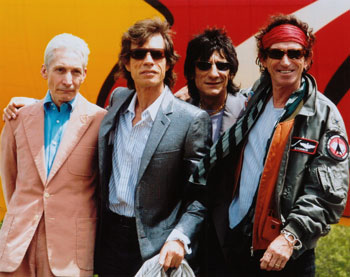
The Rolling Stones (prematurely ridiculed for their advanced age, starting years ago, as the Strolling Bones) have just mounted the highest-grossing tour ever. According to Monday's New York Times (Nov. 27), their Bigger Bang tour, which started in August 2005, has grossed $437 million. Formerly U2 were at the top, their Vertigo tour having grossed "only" $333 million, and expected to top out at $377 million in December.
Apparently, the Stones were not hurt one bit by their Condi-critical song, "Sweet Neo-Con," released last September.
Saturday, October 21, 2006
Tuesday, August 22, 2006
Buffy Sainte-Marie's censored sounds

Interesting but flawed article about government attempts to suppress the music of Buffy Sainte-Marie, as well as other Native American artists like John Trudell, during the 1970s.
Unfortunately, this is based in part on the testimony of a former government covert operative named Charles Schlund.
Now, in federal court, Charles August Schlund III stated he is a covert operative and supports Sainte-Marie's assertions that the United States took action to suppress rock music because of its role in rallying opposition to the Vietnam War...
In his federal court affidavit, Schlund said he has knowledge of ''the detailed plans for the break-up and destruction of rock n' roll music including the assassinations of many people to achieve their goals. The detailed plans to replace rock n' roll music with all-American music called country western.''
''This massive CIA and DEA covert operation was being conducted to stop political overtones in the rock n' roll music and to stop foreign influences on Americans caused by the exposure to foreign music. This operation was conducted because the Rockefellers had lost the Vietnam War because of the protest that was in part directly linked with rock n' roll music. In these files, the Rockefellers had needed the natural resources of Vietnam for the expansion of their corporate empire and they blamed the loss of the war in part on rock n' roll music.
''The assassinations started long before Vietnam but the plans to replace rock n' roll with country western music started during the Vietnam War and have continued to the present,'' Schlund stated to the court.
In his federal court affidavits filed in Maricopa County in Arizona, Schlund also stated that singer Buddy Holly, killed in an airplane crash in 1959, was considered a threat to the U.S. government.
The article brings out other evidence to suggest that the US government did make efforts to suppress Buffy Sainte-Marie, and Schlund may indeed have had knowledge of this. But "The Rockefellers"? And Buddy Holly?! Please!
Monday, August 21, 2006
"In Nashville, Sounds of Political Uprising From the Left" (New York Times)
"Country music, the genre of lonely hearts and highways, lost jobs and blue-collar woes, has become a cultural battleground. Conservatism is widely seen as having the upper hand, a red-state answer to left-leaning Hollywood.
Democrats on Music Row, the country music capital here, have grown frustrated with that reputation. A group of record-company executives, talent managers and artists has released an online compilation of 20 songs, several directly critical of Mr. Bush and the Iraq war."
Democrats on Music Row, the country music capital here, have grown frustrated with that reputation. A group of record-company executives, talent managers and artists has released an online compilation of 20 songs, several directly critical of Mr. Bush and the Iraq war."
Thursday, August 17, 2006
Gays in Metal
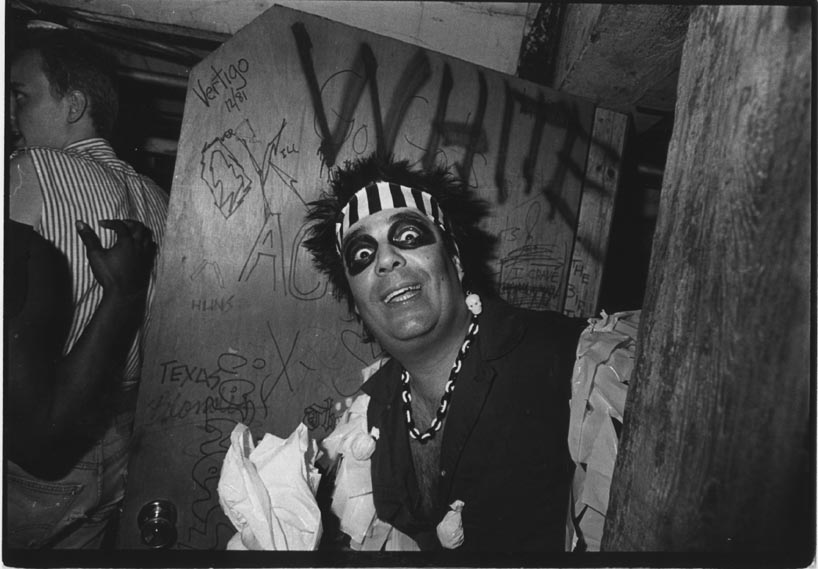
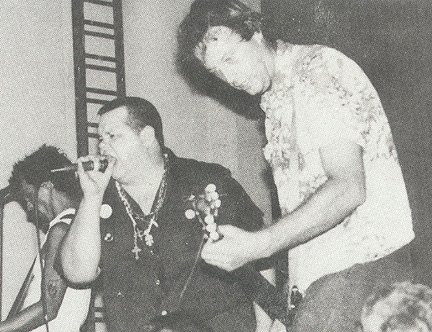
Good overview of gays in metal music, as well as punk, by Anthony Bartkewicz, in Decibel Magazine.
I was particularly interested in this observation: "punk rock has had its share of openly gay provocateurs, like the Big Boys' Randy "Biscuit" Turner [top picture], the Dicks' Gary Floyd [bottom picture, in center], and Martin Sorrondeguy of Los Crudos and xLimpwristx, who deliberately, often satirically, confronted or gay stereotypes in their lyrics and performances. The flamboyant Turner defied any homophobes in his audience by belting out hardcore in a tutu and eye makeup."
When I lived in Austin in the late 70s and early 80s, the Big Boys and the Dicks (who later moved to San Francisco) were an important part of the lively punk scene. I recall their queer provocations, and don't remember people reacting negatively. It's not correct, however, that the Big Boys were "hard core"--they were very funk influenced, their sound in some ways resembling the Gang of Four. One of their best songs was a cover of "Hollywood Swinging" by Kool and the Gang. I think my favorite Big Boys show was when they opened for Trouble Funk. (Biscuit, who was an incredibly sweet guy, died in August 2005.) The Dicks, on the other hand, along with another celebrated Austin band MDC (who also later moved to S.F.; MDC stands for, among other things, Million Dead Cops), virtually defined what hardcore stood for/stands for.
Tags: punk, queer, heavy metal, Austin
Monday, August 14, 2006
"Burn Baby Burn Hotsauce": Selling the Black Panther Party Memory
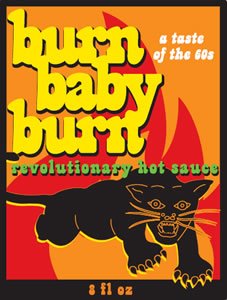
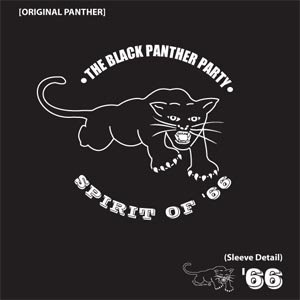
This item is a year old, but still worth recording. You can buy the "Spirit of '66" t-shirts here.
Wednesday, July 20, 2005 (SF Chronicle)
BLACK PANTHERS HOT AGAIN/Huey Newton's widow resurrects militants' memory with 'Burn Baby Burn' barbecue sauce
Rick DelVecchio, Chronicle Staff Writer
Former Black Panthers in Oakland have cooked up a hot sauce called "Burn Baby Burn" [pictured] and plan to ship it to stores in the coming weeks along with a new clothing line [a t-shirt example is pictured] trading on the legacy of the late-'60s revolutionary Huey Newton.
Newton's widow, Fredrika Newton, came up with the idea for the new brand of spicy condiment, and original Panther David Hilliard brewed the recipe at home in West Oakland, with help from his musician and amateur-cook friend Al Green of San Francisco.
The Huey P. Newton Foundation, headed by Hilliard and named for the co-founder of the militant group born in Oakland, filed an application with the U. S. Patent and Trademark Office last year to secure the phrase "Burn Baby Burn" for commercial trademark purposes.
"It was a catchy phrase, and I thought it would be reminiscent of the '60s," Fredrika Newton said Tuesday. "I sure didn't want it to be a call to burn anything other than our taste buds."
Green said: "We have a number of different kinds, and some of it is really hot -- I mean, incredibly hot."
The phrase is associated with the race riots in the Watts section of Los Angeles in 1965. Onlookers started chanting it after police arrested a young man for drunken driving. The confrontation triggered six days of rioting, resulting in more than 30 deaths, 1,000 injuries and devastating fire damage to the neighborhood.
Each bottle of Burn Baby Burn Revolutionary Hot Sauce will come with a tag noting milestones in the history of the Black Panther Party for Self-Defense, which was formed in 1966 by Huey Newton and his college classmate Bobby Seale. Newton was fatally shot by a drug dealer in Oakland in 1989. [No mention of the FBI's COINTELPRO program that targeted the Black Panther Party for neutralization and resulted in the murder of Fred Hampton and other Panthers.]
The tags will highlight the group's social legacy, Fredrika Newton said.
"I guess I want to celebrate the history and to let people know the actual facts of the Black Panther Party and how some of these programs are woven in today, like free breakfast programs and the call for free health care," she said.
Newton's idea is that the phrase should recall the Panthers' social programs. Children who benefited from the Panthers' free breakfasts in the '60s might reminisce over the taste of a mild, medium or spicy barbecue sauce, and young people might learn about the Panthers for the first time by reading the tags.
"It's not about violence, but the hot sauce will remind people of the rebellion in Watts and how the slogan came about," Hilliard said. "But this is an emphasis on using some of the revenue used by our hot sauce to educate."
Profits from the merchandise will support literacy programs, Hilliard said.
The nonprofit Huey P. Newton Foundation is rolling out the hot sauce and its "Spirit of '66" clothing line in advance of events commemorating the Panthers' 40th anniversary in October 2006.
"The hot sauce and the clothes are all a part of us trying to find new formats for marketing our history," said Hilliard, the foundation's executive director.
He sees two generations of potential customers.
"It's the hip-hop market, and certainly there's people who have a nostalgia for the '60s -- people who are looking for retro clothing, people who are still listening to Bob Dylan," he said. "And most recently, Carly Simon has a retro CD out."
Carly Simon fans are eating this up: The Black Panther clothing store's website, accessed today, says this:
We're sorry, but due to the growing popularity of our clothing line we are currently experiencing a high volume of orders and have had to suspend any future orders until we receive more stock.
Check back again soon! We thank you for your understanding and patience.
- The Black Panther Clothing Staff
Tags: Black Panthers
Monday, August 07, 2006
Medine: "French Muslim Band Speaks Against Racism, Terror"

Cleaining out the e-mail box, I found this, which is just a little dated, but still useful. The original, from IslamOnLine, is no longer up, so I post it in full.
French Muslim Band Speaks Against Racism, Terror
The band’s albums have sold a record number in France.
By Hadi Yahmid, IOL Paris Correspondent
PARIS, March 26 (IslamOnline.net) – In France, rap music no longer conjures up images of hip-hopping boys and girls or doped teenagers after a Muslim band has given it a new look.
Singing primarily against terrorism and racism, Din Records seven members are priding themselves on being Muslims moved by the sufferings of their fellow Muslims from Palestine to Chechnya.
“Other rap bands are united by drugs, but we are united by prayers,” the band’s vocal Medine said on the band’s Web site.
Established in 2002, the band denounces the injustice done to Muslims in the occupied Palestinians territories, Iraq, Afghanistan and Chechnya.
It also condemns terrorism and expresses heartfelt sympathy with the oppressed worldwide.
Din Records songs, which topped France’s music charts and sold briskly, include “Jihad” “9/11,” “Guantanamo” and “The School of Life.”
“We want to give voice to the sufferings endured by Muslims throughout the past three years in the aftermath of the attacks,” Medine says.
“9/11”
The 9/11 ditty, which has been banned by the French TV, shows a mixture of the havoc caused by 9/11 attacks in New York and Washington and the destruction caused by the US troops in Afghanistan and Iraq.
It also features the deplorable conditions of the Palestinians and the wide-scale destruction of their lands and homes by the Israeli occupation army.
“I keep looking for the root of the world’s disasters/Only to find out that the storm is blowing everywhere,” read the song’s lyrics.
“But the eyes are fixed on the twin tower/You don’t understand anything neither do I/But listen to the story from the very beginning…From September to September…From Ramallah to Manhattan…From Kabul to Baghdad,” they say.
The song says that the 9/11 attacks have had their domino effects on Muslims in France with the secularism drive picking up steam.
“In the country of the three-color flag, you have to be secular and enlightened/You must respect the values of the republic/Muslims are not allowed to wear beards or take on the hijab in schools.”
And it hits out at the media blitz against Muslims.
“In the newspapers, they accuse us of inciting violence, war crimes/They accuse us of being against the Americans though the Americans are rallying behind Michael Moore,” the US filmmaker who directed the anti-Bush “Fahrenheit 9/11.”
The song also touches on the torture and sexual abuse of Iraqi prisoners by US soldiers.
“Two or three million dollars and we will forget about Abu Gharib,” the scene of the pornographic and shocking practices meted out to Iraqi prisoners by US soldiers.
Guantanamo
The songs “Guantanamo” and “The School of Life” have to do with the humiliation of Muslims in the West.
“The storm is blowing down Islam and the residents of the suburbs, who are marginalized in transports because of their hijabs/And those young people with beards, who are banned in airports/It is a plausible reason for Islamophobia,” read the lyrics of “Guantanamo”.
“The School of Life” adds: “They tell me that I belong in the third generation of immigrants/Though I have been born here and lead a simple life/Indeed, [the Hijri year] 1425 is a minaret for our fathers, mothers and brothers.”
The International Helsinki Federation for Human Rights (IHF) said in a recent report that Muslim minorities across Europe have been experiencing growing distrust, hostility and discrimination since 9/11.
“Pre-existing patterns of prejudice and discrimination have been reinforced and Muslims have increasingly felt that they are stigmatized because of their beliefs,” said the report.
Click for “9/11” video clip
Click for Din Records Website
Subscribe to:
Posts (Atom)