Friday, July 15, 2011

Frankie Beverly and Maze in Brooklyn


A friend of hawgblawg sent in this account of a concert in Brooklyn on Monday, July 11.

“Golden Time of Day”

On Monday night, as the sun set, and a moonlight spread over Brooklyn, a humid evening was made cool and bearable by the voice of an R&B legend. Thousands turned out for the first show of the Martin Luther King concert series that has taken place in Brooklyn’s Wingate field for the past 29
years. The first concert showcased the veteran singer, Frankie Beverly and Maze, a group that has been around “oh, only 45 years,” as Beverly told the audience. Beverly opened the evening with “Southern Girl.” Dressed in white and sporting a white beret, his powerful, soulful voice resonated across the field -- and all of Flatbush it seemed. Middle-aged women danced along as he sang his hit singles, songs from their youth “We Are One,” “Can’t Get Over You,” “Running Away,” and “Happy Feelings.” Whether he was singing his smooth classics -- slow jams played on the “Quiet Storm” on WBLS (the radio station sponsoring the MLK concert series), or jamming on the keyboard, or hooping like a preacher, or jumping up and down with band members -- Beverly displayed an astonishing energy throughout the two-hour show. As he wiped sweat off his forehead with a towel, he bantered with the audience, “I’m sixty-five years old - I got a three-pack, or maybe a can, or something!”

Beverly’s group was formed in Philadelphia in 1970 – and was initially called Raw Soul. Beverly moved the group to the Bay Area in 1972, and there they were given the name Maze, by none other than Marvin Gaye. “We’re from Philadelphia, grew up with Patti Labelle and Harold Melville. We moved to Cali in 1972 because of Sly and the Family Stone,” explained the vocalist. “One night we were playing in a rinky dink club and Marvin Gaye was there.” Gaye booked Maze on his 1976 concert tour and helped them secure their first album deal with Capitol Records. “Marv took us in, gave us the name Maze. We’re inspired by Marv – he took our feet out off clay and put them on solid ground.” Over the last forty years, Beverly has had nine top ten hits and eight gold records – but no Grammy, a point the singer joked about on stage. “I get mad sometimes, but then I’ve learned that you can either have re-wards or a-wards. Some of you have been with us for over thirty five years, that is the biggest reward, our following.”

The band, also decked out in casual white outfits, was pitch-perfect. Vance Taylor on keyboards, Calvin Napper on drums, and Jubu Smith, on guitar who, as per usual, delivered a beautiful solo on “Golden Time of
Day.”

Beverly closed the evening with a pulsating rendition of “Before I Let Go.”

Another magical night in Brooklyn.

Sunday, June 26, 2011

Queer rappers

An article in Resonance (issue 53, 2007) discusses the 2006 documentary about queer hip-hop, Pick Up the Mic, by Alex Hinton. Unfortunately, it's not available on the web.

The article discusses the following artists: Scream Club, QBoy, Miss Money, and Johnny Dangerous.

For the moment, this is just a resource.

Saturday, June 25, 2011

Flash Mobs

...were invented by a senior editor of Harper's Magazine. Read about it here. Juicy excerpts follow.

As first defined by Festinger, Pepitone, and Newcomb (1952), deindividuation is “a state of affairs in a group where members do not pay attention to other individuals qua individuals”...

Consider the generational cohort that has come to be called the hipsters–i.e., those hundreds of thousands of educated young urbanites with strikingly similar tastes. Have so many self-alleged aesthetes ever been more (in the formulation of Festinger et al.) “submerged in the group”? The hipsters make no pretense to divisions on principle, to forming intellectual or artistic camps; at any given moment, it is the same books, records, films that are judged au courant by all, leading to the curious spectacle of an “alternative” culture more unanimous than the mainstream it ostensibly opposes. What critical impulse does exist among their number merely causes a favorite to be more readily abandoned, as abandoned...it inevitably will be...

Over those who would sell to the hipsters, then, hangs the promise of instant adoption but also the specter of wholesale and irrevocable desertion...With a rising generation so mercurial, one wonders whether even the notion of “branding,” i.e., the building of long-term reputations, which has remained the watchword among our corporations for more than a decade, will itself come to lose its luster...the corporation will be content merely to hitch itself to a succession of their whims.

...Not only was the flash mob a vacuous fad; it was, in its very form (pointless aggregation and then dispersal), intended as a metaphor for the hollow hipster culture that spawned it.

I know this because I happen to have been the flash mob’s inventor...


What the project harnessed was the
joining urge, a drive toward deindividuation easily discernible in the New York hipster population.

The basic hypothesis behind the Mob Project was as follows: seeing how all culture in New York was demonstrably commingled with
scenesterism, the appeal of concerts and plays and readings and gallery shows deriving less from the work itself than from the social opportunities the work might engender, it should theoretically be possible to create an art project consisting of pure scene...

The mob was all about the herd instinct, I reasoned, about the desire not to be left out of the latest fad...


What the
Times did, in fascinating fashion, was not just to run the backlash story (which I had been expecting in three to five more weeks) but to do so preemptively–i.e., before the backlash actually had materialized...

Nothing is more defining of hipsterism than semi-ironic coronation of its own
celebrities...

I was pointing out that hipsters, our supposed cultural avant-garde, are in fact a transcontinental society of cultural
receptors, straining to perceive which shifts to follow. I must hasten to add that this is not entirely their fault: the Internet can propagate any flashy notion, whether it be a style of eyewear or a presidential candidacy, with such instantaneity that a convergence on the “hip” tends now to happen unself-consciously, as a simple matter of course.

But hipsters, after becoming aware of this very dynamic, have responded in a curious and counterintuitive way. Even as they might decry this drive toward unanimity, they continually embrace it and re-embrace it in an enthusiastic, almost ecstatic fashion. No phenomenon of recent years illustrated this point as clearly as the aforementioned Strokes, who for most of 2002 held the top-band spot in hipsterdom. This was a band that, albeit enjoyable and skilled, had been clearly manufactured precisely for hipster delectation. Moreover, the hipsters were well aware of this fact, and they complained about it incessantly even as they cued up the record at parties and danced with special abandon...The Strokes made a natural object of this unanimity because their sound–derivative candy, 1970s punk simplicity dressed up with some 1990s indie-rock aloofness–was an easy common denominator...They were, moreover, easily discarded...


The most significant literary movement the hipsters have produced is
McSweeney’s, which itself had essentially the characteristics of a pop-music fad...

Like the Strokes,
McSweeney’s promised a cultural watershed for hipsters while making no demands on them...In its pages literature appeared as a sort of pot-luck barbecue where the young litterateur, merely by whipping up some absurdist trifle or other, could throw the Frisbee with established authors who were publishing their castoffs there...

Inevitably, even as
McSweeney’s has matured and gained more seriousness of purpose, it has receded in hipster esteem, just as did trucker hats, Hush Puppies, the mullet. Like starlings on a trash-strewn field the hipsters alight together, peck intently for a time, and at some indiscernible signal take wing again at once. If they are the American avant-garde it is true, I think, in only this aspect–the unending churn of their tastes, this adult faddishness in the adolescent style...

In the media coverage of flash mobs, the most curious undercurrent was the notion, almost a wish, that they would someday become something serious....

The idea seemed to be that flash mobs could be made to convey a message, but for a number of reasons this dream was destined to run aground. First, as outlined above, flash mobs were gatherings of
insiders, and as such could hardly communicate to those who did not already belong...Second, flash mobs were by definition transitory, ten minutes or less, and thereby not exactly suited to standing their ground and testifying. Third, in terms of physical space, flash mobs relied on constraints to create an illusion of superior strength...

just like flash mobs, the Dean campaign was also pure scene...

Saturday, June 18, 2011

'Cash Rules Everything Around Wu'

Great piece on the Wu-Tang Clan from Jeff Weiss and Tal Rosenberg.

The music [on Wu-Tang Forever] was even more dense and abstract than Enter the Wu-Tang. In his review for SPIN, Sasha Frere-Jones wrote that “Wu-Tang Clan are basically selling avant-garde music as pop to the world. “The first single off the album, a $1 million video directed by Brett Ratner, had no discernible chorus, and featured some of the most complex, intricate rhyming by the Clan members. It is also nearly six minutes long, the “Like a Rolling Stone” of the hip-hop era.

Thursday, May 12, 2011

8 Openly Queer Rappers

Via Color Lines, a list of five, from the inimitable Detroit rapper Invincible. Miz Korona, Mz Jonz, Thee Satisfaction, Las Krudas, and Skim. From Juba Kalamka, three more: Collin Clay, Wheelchair Sports Camp, and Big Freedia. Be sure to read about them.

And for more queer rappers, check out this earlier post on Yo Majesty.

Thursday, January 20, 2011

More on Ari Up & The Slits: NPR's Post-Punk Female Mix

I love this mix of women in post-punk from NPR's Anthony Fantano. Inspired by Ari Up (who passed away in October), it includes 56 tracks (!), which serve to give a sense of the imporant role played by women artists in this key musical moment. Lizzie Mercier Descloux, The Raincoats...Terrific. Please check it out.

photo: Abbey Braden

Saturday, December 11, 2010

RIP (Belated): Ari Up

Ari Up, singer for one of the absolute best bands of the punk era, The Slits, passed away on October 20. John Pareles wrote this about her and The Slits in 2009: “She sang mocking critiques of trendiness, romance and consumerism as the music juggled rock, ska, reggae and something like funk. The Slits came up with odd-angled chord progressions that better trained musicians wouldn’t touch.” The quote is from a very fine obit written by Colin Moynihan for the New York Times, which appears here.

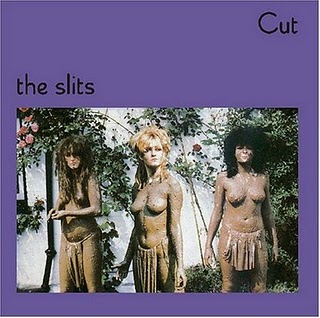
Who will ever forget the cover of The Slits first album, Cut?


The music is even more memorable.

Here are a couple of Slits songs that I particularly like:

"Typical Girls"


And (later Slits): "In the Beginning There Was Rhythm".

Tuesday, October 19, 2010

British Orientalist Pop: Kula Shaker, "Govinda" + Yardbirds, "Over, Under, Sideways, Down"


Queen Live: "Mustapha"


Ibrahim, Ibrahim, Ibrahim,
Allah, Allah, Allah, Allah will pray for you.
Hey!
Mustapha, Mustapha, Mustapha Ibrahim.
Mustapha Ibrahim, Mustapha Ibrahim
Allah, Allah, Allah will pray for you.
Mustapha Ibrahim, al havra kris vanin
Allah, Allah, Allah will pray for you.
Mustapha, hey! Mustapha
Mustapha Ibrahim, Mustapha Ibrahim, hey!
Allah-i, Allah-i, Allah-i,
Ibra-Ibra-Ibrahim, yeah!
Ibrahim, Ibrahim, Ibrahim,
Allah Allah Allah-i hey!
Mustapha Mustapha - Allah-i na stolei
Mustapha Mustapha - Achtar es na sholei
Mustapha Mustapha - Mochamut dei ya low eshelei
Mustapha Mustapha - ai ai ai ai ahelei
Mustapha,
Mustapha,
Ist avil ahiln avil ahiln adhim Mustapha,
Salaam Aleikum!
Mustapha Ibrahim, Mustapha Ibrahim
Allah, Allah, Allah will pray for you.
Mustapha Ibrahim, achbar ish navin
Allah, Allah, Allah will pray for you.
Mustapha, Mustapha
Mustapha Ibrahim, Mustapha Ibrahim, hey!
Allah-i, Allah-i, Allah-i,
Ibra-Ibra-Ibrahim, yeah!
Ibrahim, Ibrahim, Ibrahim,
Allah Allah Allah-i hey!
Mustapha Mustapha
Mustapha Mustapha
Mustapha Mustapha
Mustapha Mustapha
Mustapha,
Mustapha,
Vontap ist ahiln avil ahiln adhim Mustapha,
Aleikum Salaam hey!

Tuesday, October 12, 2010

Salt 'n' Pepa, "Shoop"


Hey, yeah - I wanna shoop, baby

[Oooo, how you doin', baby?
No, not you
You, the bow-legged one, (ha-ha) yeah
What's your name?
Damn, that sounds sexy]

Here I go, here I go, here I go again (again?)
Girls, what's my weakness? (Men!)
Ok then, chillin', chillin', mindin' my business (word)
Yo, Salt, I looked around, and I couldn't believe this
I swear, I stared, my niece my witness
The brother had it goin' on with somethin' kinda...uh
Wicked, wicked (oooo) - had to kick it
I'm not shy so I asked for the digits
A ho? No, that don't make me
See what I want slip slide to it swifty
Felt it in my hips so I dipped back to my bag of tricks
Then I flipped for a tip, make me wanna do tricks for him
Lick him like a lollipop should be licked
Came to my senses and I chilled for a bit
Don't know how you do the voodoo that you do
So well it's a spell, hell, makes me wanna shoop shoop shoop

Shoop shoop ba-doop
Shoop ba-doop
Shoop ba-doop ba-doop ba-doop
Shoop ba-doop
Shoop ba-doop
Shoop ba-doop ba-doop ba-doop

Ummm, you're packed and you're stacked 'specially in the back
Brother, wanna thank your mother for a butt like that (thanks, Mom)
Can I get some fries with that shake-shake boobie?
If looks could kill you would be an uzi
You're a shotgun - bang! What's up with that thang?
I wanna know how does it hang?
Straight up, wait up, hold up, Mr. Lover
Like Prince said you're a sexy mutha-
Well-a, I like 'em real wild, b-boy style by the mile
Smooth black skin with a smile
Bright as the sun, I wanna have some fun
Come (come) and (hmmm) give me some of that yum-yum
Chocolate chip, honey dip, can I get a scoop? (please)
Baby, take a ride in my coupe, you make me wanna...

Shoop shoop ba-doop (Baby, hey)
Shoop ba-doop
Shoop ba-doop ba-doop ba-doop
Shoop shoop ba-doop (Don't you know I wanna shoop, baby)
Shoop ba-doop
Shoop ba-doop ba-doop ba-doop

Well let me bring you back to the subject, Pep's on the set
Make you get hot, make you work up a sweat
When you skip-to-my-lou, my darling
Not falling in love but I'm falling for your [super sperm]
When I get ya betcha bottom dollar you were best under pressure
[Yo, Sandy, I wanna like, taste you]
Getcha getcha lips wet cuz it's time to have Pep

On your mark, get set, go, let me go, let me shoop
To the next man in the three-piece suit
I spend all my dough, ray me, cutie
Shoop shoop a-doobie like Scoobie Doobie Doo
I love you in your big jeans, you give me nice dreams
You make me wanna scream, "Oooo, oooo, oooo!"
I like what ya do when you do what ya do
You make me wanna shoop

Shoop shoop ba-doop
Shoop ba-doop
Shoop ba-doop ba-doop ba-doop
Shoop shoop ba-doop
Shoop ba-doop
Shoop ba-doop ba-doop ba-doop

[Oh, my goodness, girl, look at him
He's the cutest brother in here
And he's comin' this way! Oooo!]

S and the P wanna kick with me, cool (uh-huh)
But I'm wicked, G, (yeah) hit skins but never quickly (that's right)
I hit the skins for the hell of it, just for the yell I get
Mmm mmm mmm, for the smell of it (smell it)
They want my bod, here's the hot rod (hot rod)
Twelve inches to a yard (damn) and have ya soundin' like a retard (yeah)
Big 'Twan Love-Her, six-two, wanna hit you
So what you wanna do?
What you wanna do?
Mmmm, I wanna shoop

Shoop shoop ba-doop
Shoop ba-doop
Shoop ba-doop ba-doop ba-doop
Shoop shoop ba-doop
Shoop ba-doop
Shoop ba-doop ba-doop ba-doop

Oh, you make me wanna shoop
Hey yeah, I wanna shoop, baby

Monday, October 11, 2010

some lesbian rap: Yo Majesty

And that is how a lesbian rap group from Florida got an uptight Manhattan crowd to relax a little.

Julianne Shepherd, in The New York Times, Jan. 27, 2008, on the out lesbian rappers Yo Majesty & others.

Yo Majesty ([TIM SACCENTI)

It’s a lackluster time for mainstream female rappers, with M.C.’s like Foxy Brown and Remy Ma making more headlines for jail stints than for their music. Lil’ Kim hasn’t gone platinum since 2003, Eve’s comeback album has been delayed several times, and Missy Elliott’s first record in three years isn’t due until late spring. Fergie, with her singsong chants about her feminine wiles, is the closest thing to a female rap superstar these days. [OUCH!--T.S.] But in the wake of the critical favorite M.I.A., a new crop of young, multicultural, female hip-hop acts is causing a stir on the Internet and in indie-label conference rooms.

To wit, Yo Majesty, Santogold, Kid Sister, Amanda Blank.

Be sure to check out Yo Majesty's e.p., "Kryptonite Pussy." Yo Majesty has toured in the UK with The Gossip (of Searcy, Arkansas fame). And check out Shunda K, live, performing with Peaches in Berlin on "Buck You Like a Billionaire."

Sunday, September 05, 2010

Spectacle Rules in Women's Pop: Jon Caramanica

From the New York Times' Sunday Arts & Leisure section (July 25, 2010), this report by Jon Caramanica on the decline of "sincerity" (Lilith Fair, Sarah McLachlan) in women's pop and the ascendance of spectacle.

Featuring Lady Gaga, Christine Aguilera, Kate Perry, Kesha, Beyoncé and Nicki Minaj (below).

Saturday, September 04, 2010

Gender & Indie

Girls: don't try this...

From GuidedByVeal, posted on the Guardian Music Blog on Sept 1, '10. Read the entire post here. Juicy excerpts follow.

Without a doubt, indie has a more enlightened sense of gender relations than many musical genres. You can see this in a number of areas, such as pioneering co-ed bands (Pixies, Arcade Fire, Lush, the White Stripes, Elastica, My Bloody Valentine, Quasi, Slowdive, the xx , Autolux, Beach House, the Kills, feel free to carry on) and the blending of gender-coded imagery where androgyny has been consistent in clothing and physicality...Androgyny can even been seen in the common use of falsetto by male singers as a higher register is usually associated with femininity. The blending of gender imagery is common in rock and pop, but the central value of equality, even between performers and audience has made humanist gender relations the ideal in indie.

However, in practicality, indie does not exist in some parallel universe. I can't tell you the number of times I've seen female musicians ignored in interviews. Additionally, female spectatorship and fanship is sexualised. There is an assumption if you are female at a show that you are sexually available to performers...This assumption that audiences are filled with sexually overwhelmed girls is belied by the fact that for rock and metal as well as for indie the audiences are disproportionately male.

At indie shows, you still see gender distinctions in distribution patterns and activities. Women tend to stand right at the front and by the speaker stacks, rarely in the central area where dancing might happen. Groping is absolutely taboo, yet women are still loathe to crowd surf because it only takes one jerk in an audience to violate a woman which limits her ability to participate in audience activities available to males. During my research I've been told by countless women that they refrained from crowd-surfing and most of them (including myself) had been groped at shows...

The restriction of female participation was part of the rationale for stopping stage diving and discouraging crowd-surfing. British indie has been – and still is – consistently and significantly more egalitarian in terms of gender relations than America. In the noughties, when indie aesthetics overtook alternative music in the US, it ostensibly produced more female equality...

However, even in 2006, when Pitchfork reviewed my book on the culture of indie music, the writer actually talked about my cleavage!

(Meanwhile, regarding crowd surfing, Lady Gag thinks otherwise.)

Monday, August 30, 2010

Sony Walkman Ads

Great resource for television and print advertisements for the Walkman.

Sony Walkman and Cultural Regulation


This post (Jay Allen Sanford, "Responding to Personal Spam, History of Personal Music Players, Soundmen Sound Off, Concerts Make You Deaf, & Musical Car Horns," San Diego Reader, June 3, 2008), expands upon the question of the cultural regulation of the Walkman (and more recently, the iPod).

Relevant bits:

Hector Gonzales, a substitute teacher in San Diego public schools, never hesitates to confiscate Walkmans or iPods (which he returns to students at the end of the school day). "When you wear them in public, headphones are anti-social devices [which] foster self-centered, elitist attitudes and prevent the kindling of conversation among fellow human beings. Especially with teenagers, who need as much social interaction as possible in order to be well adjusted adults. And they play [music] at such a high volume...anyone standing nearby can discern specific lyrics."

Shortly after talking to Gonzales, I come across a teenager - "Sammy" - seated at a bus stop on El Cajon Boulevard, though I hear him before I see him due to the volume of the music he's playing through his iPod headset. Once I coax him out from under the speaker pads, I ask whether he feels cut off from his surroundings when his "private" music is loud enough to drown out all outside noise.

"Some people give me dirty looks, but kids my age are into it. Like, if I see another guy [with a Walkman or iPod], we might start talking about what bands we're playing. So it's just the opposite as anti-social. It was a dude with a Walkman who turned me on to his Suicidal [Tendencies] CD, 'cause we swapped headsets to check out each others' tunes. That's a complete stranger, dude. The music's what got us talking."

..."When I'm at the gym, I put on [this] headset but there's nothing playing," says Deborah Macey, whom I spot wearing headphones at a Family Fitness Center...

"I thought you were hitting on me. See, I put [the headset] on to keep away all the guys who come here just to use pickup lines...

The jury is still out as to whether wearing HEADPHONES while working out to music is more damaging to your hearing.

On the premise that headphones isolate wearers and prevent them from hearing important sirens, threatening engine noise and car horn warnings, California's Vehicle Code section 27400 states that "No person operating any motor vehicle or bicycle shall wear any headset covering, or any earplugs in, both ears."...

The code is rarely enforced, although bicyclists sometimes find themselves cited. "It's not very fair, because there's no law against deaf people riding bikes," argues Jeremy Porter of Senior Spokes, a North County cycling club. "Earmuffs, the kind you use to keep your ears warm, aren't illegal to wear on a bike or in a car, but they 'cover both ears' and drown out a lot more sound [than headphones]. There is one good reason not to wear headphones [while bicycling]. If someone else hits you, it's a lot harder to collect from the other guy's insurance company if you get into an accident with headphones on! They'll say it was your fault because you couldn't hear what was going on around you!"

Porter points out that car manufacturers brag about how soundproof it is inside their vehicles. "By comparison, wearing headphones doesn't block out nearly as much sound as the closed windows and soundproofing in a new Lexus. Walkman headphones are optimized for frequency bandwidths from around 600 hz to 3000 hz. That's about the same as the average speaking voice. Noise at frequencies outside this range can be heard easily through the speaker pads, as long as the headphones aren't played to loud. Lightweight open-air mini-headphones aren't going to block out the sound of a siren or a car horn or even a barking dog."

...As for wearing headsets while listening to private music on the job, some studies indicate that allowing employees to do so increases productivity and boosts workplace morale - and eliminates arguments over what music should be played aloud.

In one study of organizational behavior, 75 out of 256 workers of a retail sales company listened to personal stereos on the job for four weeks. They showed a 10-percent increase in productivity compared to co-workers.


Saturday, August 21, 2010


Swinging London from Marc Campbell on Vimeo.
Found this on Dangerous Minds, which tells us:

"Look At Life" were a series of short documentary films produced in the 1960s by the Rank Organization. They were shown in British movie theaters before the main attraction. Shot in vibrant color, Look At Life often focused on ‘Swinging London’.

In these two clips we get a peek into the King’s Road fashion scene and hip London coffeehouses. Groovy.


A few sample phrases that I snatched from the "Swinging London" segment:
buy uniforms of the past to affront the uniformity of the present
caftan seekers from gay Arabia
a super charade of happy happenings
A screen capture of London male 60's fashion:

In the café segment, I learned that the Universities and Left Review (forefunner of New Left Review) started a cafe called The Partisan in order to fund the magazine.

Update, December 30, 2012

That Vimeo segment has gone dead, but here's a replacement:

Thursday, August 12, 2010

Zoe Chace on women pop stars adopting personae

Nicki Minaj as the Harajuku Barbie at 2010 BET Awards (Frederick M. Brown/Getty Images)


There are some pop stars right now who look a lot like drag queens — Lady Gaga, Nicki Minaj, Beyonce, Katy Perry, even Ke$ha.


Excellent report, on today's Morning Edition. Listen to it, or read it, here.

A few more juicy excerpts:

Gaga has started calling her fans "monsters." 18-year-old Darnell Purt is one of those them. He just graduated high school in Brooklyn. "We're all monsters," he says. "Like, if they think that I'm a monster because I'm bi, or I'm a hermaphrodite, or I dress funny, or I'm gay-friendly, then we're all monsters. We're all crazy monsters"...

This is a modern phenomenon, but that doesn't mean it's new, says Judith Halberstam, who teaches media studies at the University of Southern California.


"Look back at the 19th century at people like Oscar Wilde," she suggests. "Oscar Wilde may well be one of the early people who created a public persona for himself and then was happy, when called upon, to perform this role of the glib dandy who was full of one-liners."


Instead of spinning around helplessly in a media cycle devoted to his outlandish behavior, Wilde grabbed the steering wheel...

So are these stars controlling their fans, controlling their media coverage, or just enabling everyone's inner drag queen to come out?

Saturday, July 10, 2010

Virginia Heffernan on digital photos and parenting


Very perceptive article from the New York Times Sunday Magazine, Feb. 25, 2010.

Bits in bold are mine.

Framing Childhood

Has the curating of digital photos come to define modern parenting?

American children in 2010 have a bright, clear reason for being. They exist to furnish subjects for digital photographs that can be corrected, cropped, captioned, organized, categorized, albumized, broadcast, turned into screen savers and brandished on online social networks.

I’m trying my hand at anthropology here: where farmers bred to produce field hands, industrial workers bred because they couldn’t help it and Kennedy-era couples bred to goose the G.N.P. by buying sailor suits and skis, we form families in the Internet age so we can produce, distribute and display digital photos of ourselves.

The marching orders come immediately, with the newborn photo, which must be e-mailed to friends before a baby has left the maternity ward. A conscientious father — chief executive of the budding business — must snap dozens of shots of the modestly wrapped newborn, generally with a Canon PowerShot though sometimes with a showy digital single-lens-reflex camera or a lowly cameraphone. Back at a laptop, he uploads the haul, scrutinizing pixels with the intensity of Anna Wintour. He selects a becoming one. The mother signs off, often via e-mail, from her hospital bed.

A parent may also edit the picture, correcting red eye or composition or even complexion problems, perhaps adding a jolly border or animated confetti (depending on class affiliation). Enclosed in an e-mail message, accompanied by a line or two of introduction, the portrait is broadcast like direct-mail advertising.

Thus a parent is minted. Good thing the drill starts early, as the signature act of Internet-era parenting repeats itself, again and again, in tighter and tighter cycles, throughout a childhood. It determines the rhythms of beach vacations and snow days. Eventually the business of family-image production and dissemination incorporates increasingly sophisticated and expensive cameras and photo-edit software and microblogging and distribution and organization systems (Tumblr, Picasa, Picnik, MyFamily, Shutterfly, Snapfish, Kodak Gallery). Before long the family has become a multimedia publisher, and — though it imagines itself a producer — a consumer of digital tools, gadgetry and broadband.

For a parent, this time-consuming vocation has twin payoffs: it wins you a break from your actual children while bringing you closer to their images. Pictures of kids, like idealized Victorian boys and girls, can be seen but not heard.

The child’s life, reciprocally, becomes that of a model — and more. Every aspect of the family business becomes familiar to a child. Early on, she learns that she can examine a photo on a viewfinder as soon as it’s snapped; that she should monkey around rather than pose, as “film” is distinctly not at a premium; that a substantial share of her parents’ mysterious clicking at their computers consists of organizing and reorganizing images of her. My own son’s first word for laptop, when he saw a woman plugging away at one at Starbucks, was the word he used for himself: “baby.” What else could the woman be doing so intently at a screen but what he saw me do — paging through picture after picture of him?

The connection between parenthood and digital photography dawned on me during Apple’s video presentations of the iPad, the company’s latest personal-computing device. In the videos, a parade of Apple executives, clean-cut men with close-cropped hair, caress a glassy, oversize tile, while proselytizing about it. “It’s going to change the way we do the things we do every day,” raves Phil Schiller, an Apple vice president.

So which of digital culture’s great offerings — which of the “things we do every day” — are enhanced by the iPad? Let’s look at the demos. Are there shooter games, pornography, academic papers, live sports, message boards, chat, e-commerce, political blogs?

No. Instead, there are family photos. The iPad user, as we meet him, is a man alone, aswim in pictures of kids. Sure, he watches movies like “Up,” reads Ted Kennedy’s memoirs and plans and chronicles travel to Telluride, Colo. But what he does most ostentatiously is organize and exhibit photographs of children: at birth, on the beach, in Paris in the rain, with conch shells to their ears. One of Steve Jobs’s first boasts about the iPad screen? “People put their own photos on it.” Later, the iPad e-mail client is demonstrated as it sends a baby picture. Scott Forstall, a senior vice president at Apple, doesn’t hold back: “IPad is absolutely the best way to view and share your photos.”

Increasingly, personal technology seems like a delivery device for a lifestyle, a tacit prescription of how to live in the Internet’s symbolic order. Study something like the iPad closely enough, and it seems to set a course for how we’re now to use words and images for business and pleasure. Maybe it shouldn’t be surprising in shaky economic times that the highest calling for the heaps of digital devices in our lives, with their functioning in excess of anything we rationally require, is to shore up our families, and advertise them to the world, and back to ourselves.